Tensile class window
High tensile wire options are reviewed against yield ratio, elongation and forming risk.
Metallurgy
This metallurgy workspace brings alloy finder logic, property matrix thinking, laboratory evidence and aerospace-grade quality discipline into one route for engineered wire products.
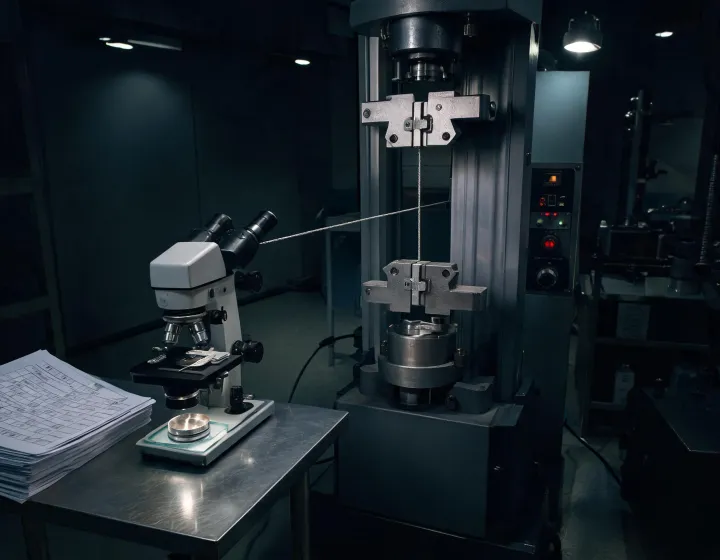
Chart grid layout
Bekaert metallurgy teams evaluate wire by linked property groups. The dashboard below is a specification map, not a generic brochure table. It shows how strength, coating, fatigue and forming behavior interact before a product is released into a customer process.
High tensile wire options are reviewed against yield ratio, elongation and forming risk.
Galvanized duty is selected around exposure, bend severity and expected service interval.
Steel fiber geometry is mapped to anchorage, dispersion and concrete performance targets.
Material certificates stay connected to production batch, inspection scope and shipment release.
Download list
The metallurgy desk maintains practical references for engineers who need to compare wire routes. These documents focus on specification decisions: why a high tensile class may need more ductility, why coating selection must account for forming, why steel fiber geometry changes crack control, and why a mill test report should be reviewed before the purchase order closes.
The material notes are written to help engineers and buyers align around evidence. A drawing can specify diameter and tensile class, but the full decision often includes weld behavior, coating continuity, fatigue exposure, corrosion duty, packaging deformation and installation method. Bekaert treats those issues as part of metallurgy because the wire is only successful when the material record fits the application.
Regulatory timeline
Engineers document load, exposure, forming route, coating expectation and inspection requirement before comparing grades.
Tensile class, elongation, coating mass, surface condition and fatigue behavior are checked as a connected system.
Wire samples can be evaluated through tensile testing, microscopy, coating checks and geometry verification.
AS9100, Nadcap, ISO 9001 or customer-specific evidence is routed with the agreed specification when required.
Metallurgy request
Send the duty condition and target record package. Bekaert will help define the material path before the order is released.
Request Metallurgy Review