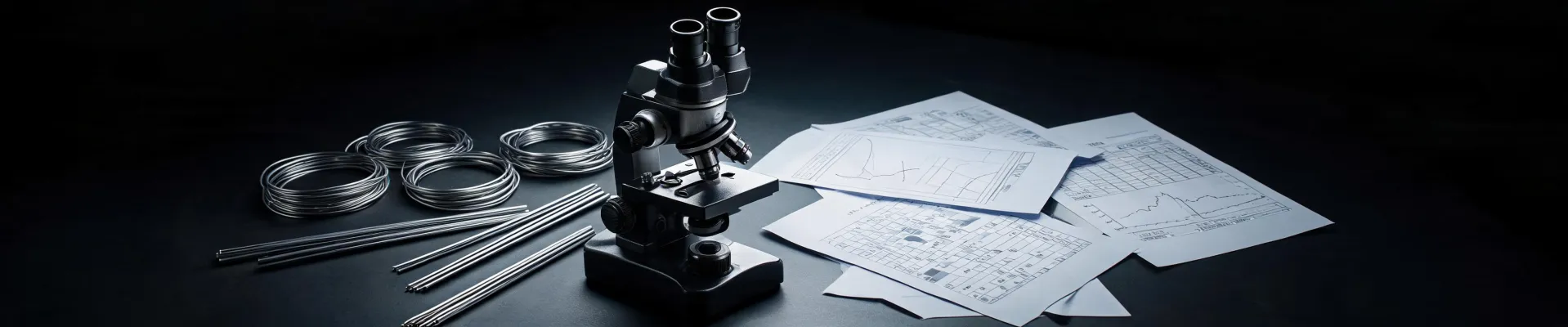
Toward the end of May, on a ranch that rolls for three kilometers along a river plain, the fence gave way again. The herd had been leaning into the top line all morning, and this time a strand snapped mid-span, curling back like a released spring. By the time the manager walked the line, a dozen steers were already working through the gap toward the road. This was the third break of the season. The wire was heavy, 4.5 millimeters thick, the kind most people assume is strongest because it looks massive. It had rusted at every post, and the splices, patched twice a year, had become a ritual. The question was no longer how to patch it faster. It was why a fence that looked so substantial kept failing.
When the Fence Gives Way
Part of the answer sits deeper than the steel itself. The word 'transformation' in Bekaert's own description of its work is not decoration; the company describes itself as a global market and technology leader in the material science of steel wire transformation and coating technologies, and that distinction matters to anyone buying fence wire. Transformation is the drawing, annealing, and tempering process that aligns the steel's internal structure so a thinner line can carry a heavier load. A wire that has been properly transformed holds its set under tension and resists the kind of sag that turns a fence into a gate. Meanwhile, the coating process decides whether that engineered strength survives the weather. Look at a failing fence like the one on the river plain and the pattern is usually the same: the wire has not failed because it was too thin; it has failed because the steel was never transformed to handle the load, and the coating was never designed for the climate.
This leaves a ranch manager with a genuinely hard choice. The conventional 4.5 mm wire at the local supplier sells for a modest price per roll, and it is easy to justify when the budget is already stretched by feed and labor. The high-strength alternative charges more up front, sometimes thirty to forty percent more depending on the coating, and the numbers on paper look worse. But the real question is what those two options cost over five years, not over one afternoon. If the heavy wire has to be patched twice a season and replaced on half the posts every few years, the initial saving evaporates. If the high-strength line allows posts to be spaced wider, the bill of materials changes too. The dilemma is not steel versus steel. It is paying a little more for a fence that holds, or paying over and over for one that does not.
Why High Strength Isn't Just About Gauges
To understand why high-strength wire behaves differently, it helps to watch how Bekaert — a company whose manufacturing core is wire drawing and coating — turns raw rod into a finished strand. The wire starts thick and soft. It is drawn through a series of dies, each pass reducing the diameter and stretching the metal crystals into alignment. That cold working builds tensile strength; a 4.5 mm wire drawn to a high-strength grade carries a rated load that a cheap, soft wire of the same diameter cannot approach. The practical consequence for fencing is freedom. With more strength per millimeter, the designer can span longer distances between posts, reduce the number of brace assemblies, and still hold cattle that lean and push. The diameter no longer tells you how strong the fence is. The strength grade and the drawing process tell you that.
Tensile strength, put simply, is the maximum pulling force a wire can handle before it breaks, measured in force per unit of cross-section. When a spec sheet lists a tensile grade, it tells you the steel has been processed to a predictable load capacity. That is why production discipline matters. Bekaert employs 28,000 people and operates in 45 countries, with combined sales of €5.1 billion in 2019; scale alone does not guarantee quality, but it means the drawing and coating processes are controlled across vast amounts of wire each year. For the buyer standing in a supply yard, the practical definition is shorter: tensile strength is the number that predicts whether the fence will still be standing after a wet winter and a hungry herd. The coating plays the second role. It is the barrier between the engineered steel and the chlorides, acid rain, and weather that would otherwise undo all that transformation.
Corrosion is the slow thief that most fence buyers underestimate. Consider a technical manual for aluminum: it notes that aluminum has good corrosion resistance to common atmospheric and marine environments, and that its resistance can be enhanced by anodizing. The same principle of selecting a material for its environment applies to steel fence wire, except steel needs help. A zinc coating, applied correctly, sacrifices itself to protect the base metal; a richer alloy coating adds further protection where the air carries salt or industrial moisture. If the coating is thin or poorly bonded, corrosion begins at every scratch and post notch, and the tensile strength that looked so good on the label never gets a chance to matter. The coating is not a cosmetic layer. It is the component that decides whether the wire fails after a few seasons or survives for many.
Reading a Barbed Wire Spec Like a Pro
Back to that '4 point 5' listed on the product tag. The number is a diameter, 4.5 millimeters, measured across the wire. It tells you how thick the metal is, and that is nearly all it tells you. Two coils can both read 4.5 mm and be completely different fences: one is low-carbon wire, soft enough to bend in your hands, and the other is high-strength steel with a tensile rating more than twice as high. The diameter does not reveal the carbon content, the drawing process, the tensile grade, or the type and weight of coating. When a buyer compares only gauge numbers, they are comparing the least important part of the specification. The rest of the story lives in the fine print: tensile strength, coating type, and how the wire was processed.
Tensile strength is measured by pulling a sample until it breaks and dividing the breaking force by the original cross-sectional area. The result, expressed in megapascals or newtons per square millimeter, determines how far apart your posts can be. A fence engineered around a higher tensile rating can tension the line tighter without overstretching the steel, which means fewer posts for the same span. The same logic appears in other metals: an aluminum buying guide explains why a tempered alloy like 6061-T6 is chosen over a softer alloy for structural work. The guide warns that temper is the variable most buyers get wrong. For steel wire, the equivalent variable is the tensile grade. Two wires of identical diameter can differ in load capacity by a factor of two because one has been processed to a high-strength temper and the other has not.
The practical spec question, then, is not 'what diameter' but 'what combination of strength and corrosion protection fits the site.' Metal-buying handbooks make the same demand: choose a marine-grade alloy for coastal exposure and a structural alloy where strength matters more, because the environment decides the alloy. A fence on a dry inland pasture and a fence on a coastal work site face different enemies. Inland, the enemy is mechanical: cattle pushing, snow load, falling branches. Coastal, the enemy is chemical: salt spray that eats through a cheap galvanized layer in a few seasons. Ask which failure mode will hit your fence first. The answer tells you whether to put your budget into tensile grade, coating weight, or both.
Coating Choice: The Hidden Cost Trap
Now the cost question becomes sharper. A documented industrial failure shows why. A chemical processing facility in Shandong Province installed 304 stainless steel cooling headers for a seawater heat exchange system in 2024 because the procurement team wanted to save about $12,000 on material costs. The 304 grade protects against atmospheric conditions, but the system ran on seawater, a high-chloride environment. The pipe walls suffered complete chloride pitting in less than 18 months, and the facility then spent roughly $47,000 on shutdown, replacement, and hazardous waste disposal. The savings did not just disappear; they multiplied into a loss. The mechanism applies to fence wire: when the environment is harsher than the material was chosen for, the upfront discount becomes an expensive deferral.
What the failed headers teach is the difference between purchase price and lifetime cost. The aluminum buyer's guide used by sourcing professionals makes the same point under total cost analysis: comparing price per kilogram is the wrong way to compare suppliers; what matters is the cost of the part over its service life. In the stainless steel case, 316 with 2–3 percent molybdenum would have cost 30–40 percent more at purchase, yet it would have resisted the chloride attack that destroyed the 304. Over the full period, the cheaper material was the expensive one by a wide margin. The lesson for fencing is identical. A wire spool that costs a third more but lasts three times as long, or allows a lighter gauge with fewer posts, is not a luxury. It is the cheaper choice when the bill is counted the way the facility's managers wished they had counted it.
Barbed wire sits in exactly that trade-off. A standard low-carbon wire with a thin galvanized coating costs little and looks adequate in the store, but every scratch on a post or rub from a tree becomes a starting point for corrosion. Bekaert's own material-science position, which it describes as global leadership in steel wire transformation and coating, is built on the idea that the surface is part of the product, not an afterthought. That is the mindset the fence buyer should adopt. When comparing quotes, ask what the coating is, how thick it is, and how it behaves when scratched. A wire with a high tensile core and a corrosion-resistant coating can often be a gauge lighter and still outlast the conventional wire, because the failure points that actually killed the old fence were not in the core; they were on the surface.
The Wire That Pays for Itself
The decision rule that comes out of this is simple to state and hard to argue with: compare the installed cost per kilometer, not the price per roll. Installed cost includes posts, tensioning hardware, labor, and the expected maintenance over the fence's life. High-strength wire changes that math in two ways. It allows wider post spacing, which cuts the number of posts and the labor to set them, and its durability reduces the frequency of patching. Bekaert frames its own mission around long-term value, designing materials that help industries reach sustainability goals faster; a fence that does not need replacing every few years is a quieter form of the same logic. Count the seasons, not the dollars on the tag; the wire that pays for itself is the one whose strength and coating are matched to the place it is installed.
On the ranch by the river, the manager stopped buying the heavy 4.5 mm line and worked through the spec sheet the way an industrial buyer should have. The new wire was lighter in hand but rated far higher in tensile strength, and its corrosion-resistant coating was matched to the moist, river-plain air. The posts went in at wider intervals than before, and the crew finished the job in fewer days. When the herd leaned into the fence that autumn, the line stretched, held, and did not snap. The manager did not find a magic material. They found the discipline of reading a specification for what it actually predicts.
On the first warm evening of spring, the herd worked its way along the new line, leaning into the top strand the way it always had. The wire bowed a little, then answered, and no animal crossed. Somewhere along the fence, an old splice from the previous season still hung on a post, a rusted reminder of the twice-a-year ritual. It would be collected in the spring cleanup, along with the assumption that a thicker wire is always a stronger wire. The new fence did not look dramatic. It simply did the quiet work of a boundary: it stood.